Showing posts with label just know. Show all posts
Showing posts with label just know. Show all posts
Wednesday, February 12, 2014

online earnings
Hi Frnd!
Are you looking for Online Part-time jobs along with your regular job ?
1. Join Spicetomail.com for Free & Get Rs.100 as Instant Bonus!!
2. Earn Rs.500/- per Week by Just Reading their advertisment E-mails Daily.
3. Refer your Friends & Get Rs.3/- for each Friends, this will go on for 5 levels.
4. Login Daily and Get Monthly Bonus Rs.20/- into your Account.
5. Whenever you reach Rs.500/- .Get Your Earnings Every Week by Cheque.
its Already Over 2 Lakh Active Users Doing This .....
Join Now & START Earning immediately
http://www.spicetomail.com/index.php?ref=B14M00291353?utm_medium=cpc
Sunday, February 2, 2014
Cook Now
Hello everybody! Hope you had a great start in this year 2008  .
.
Here is the way I made aloo paratha today..And I know all of you know very well to make this one,yet for my future reference and those who don't know before…, I am posting this one!
For me Aloo paratha means it has to be thin and soft, with the stuffing blended well with the dough. This
.Here is the way I made aloo paratha today..And I know all of you know very well to make this one,yet for my future reference and those who don't know before…, I am posting this one!
For me Aloo paratha means it has to be thin and soft, with the stuffing blended well with the dough. This
is the way I learnt from my friend (Sangeeta) and I always make this way. For all stuffed parathas, the key
is to have the dough and stuffing in same consistency. If the dough is very tight and tough, the stuffing
will ooze out. And even if the stuffing is gooey or watery, the paratha will become sticky and hard to roll.
Knead dough to a non-sticky consistency similar to how we prepare for chapattis and keep for some
Smear with butter or ghee both sides if desired. Serve with pickle or Dahi. Want something different?
Tip : Roll and cook side by side the parathas. Do not roll and keep as it may become sticky or soggy.
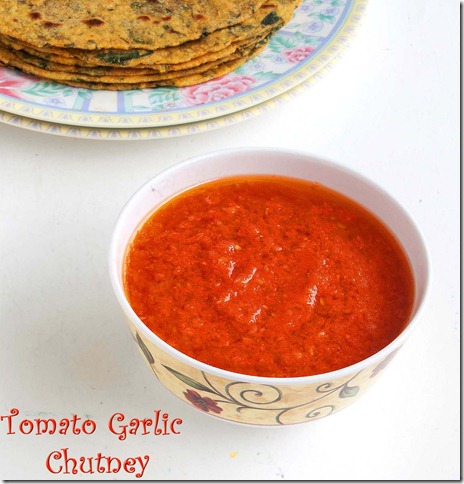
This is very simple to make and it can be a good side dish for aloo,methi parathas! Also I would
Aloo Paratha recipe
Prep Time: 15 mins | Cook time: 5 mins per paratha | Makes: 6
Ingredients
| Wheat flour | 1 cup |
| Oil (optional) | 1 tsp- 1 tblsp |
| Salt & warm water/milk | As needed |
Knead dough to a non-sticky consistency similar to how we prepare for chapattis and keep for some
15 - 30 minutes.
For stuffing
| Boiled and mashed potatoes | 3 large |
| Coriander leaves | 2-3 tblsp |
| Green chilies | 4-5 nos. |
| Ajwain/Omam | 1/2 tsp |
| Salt | as needed |
Method
- Make equal sized balls out of the dough and the stuffing.
- Roll the dough ball to a thick,palm sized circle.
- Keep the stuffing in the middle and cover it from all sides towards the middle and press to a patty.
- Dust the platform with flour and roll as thin as possible so that the dough covers the stuffing as a thin layer. refer the video for help.
- Heat tawa and cook the parathas both sides in medium low flame,add oil as needed,till golden brown spots appear. If needed, press the parathas gently with the spatula to ensure even cooking.


Smear with butter or ghee both sides if desired. Serve with pickle or Dahi. Want something different?
Try the below recipe as side dish.

Video: How to roll stuffed paratha
Tip : Roll and cook side by side the parathas. Do not roll and keep as it may become sticky or soggy.

This is very simple to make and it can be a good side dish for aloo,methi parathas! Also I would
recommend this chutney because,the garlic in this chutney nullifies/neutralizes the gastric properties
of aloo,so good for health chutney  . This is a treat for garlic flavour loving people and perfect for all
. This is a treat for garlic flavour loving people and perfect for all
sort of parathas/stuffed and plain. Try this,you will be amazed!

Aloo Paratha Side dish Tomato garlic recipe
Ingredients
| Tomato | 2 big (ripe) |
| Garlic | 10 – 12 flakes |
| Salt | as needed |
| Sesame oil | 1/8 Cup + 2 tblsp |
Method
- Chop the tomatoes roughly, peel and Crush the garlic little.Grind the tomatoes in a mixer to a
- smooth paste without adding water.and then add this to the ground tomato and again run 2-3
- times (use Juice/inch option),taking care to not to grind it smooth..Garlic should be visible as
- little little bits.
- Heat the gingelly oil(nallennai),preferably in a flat broad pan...really really hot,till it fumes.Add
- the ground mixture and stir well. Let it boil only for a minute and by this time the colour would
- have changed and the oil should have separated.
- Put off the stove and transfer to the serving bowl!


Notes
- Don't substitute sesame oil with any other oil..
- Don’t reduce the oil amount,be generous,sesame oil is only good for your health.
- It also suppress the garlic flavour’s raw smell and makes it smell balanced .
- Don’t let boil more than a minute. You can find the correct time,as when the chutney’s colour changes as it boils.
I also tried a Korma form Lavanyaa's cookery corner..Even though I dint get her korma colour...I think
I will get it right next time! It was very nice...! Here's a picture of that one to share with you all!


source - http://www.rakskitchen.net/2008/01/aloo-paratha-with-tomato-garlic-chutney.html
Friday, October 25, 2013
10 inventors who didn't get mega-rich from their inventions

Doug Engelbart, who has died aged 88, never really made any money from inventing the mouse. Here are 10 others who didn't get to be billionaires.
1. LEDs
When Nick Holonyak Jr invented the first practically useful LED in 1962 he predicted it would one day replace Edison's lightbulb. Holonyak's colleagues have said he should be given the Nobel Prize but he humbly says: "It's ridiculous to think that somebody owes you something. We're lucky to be alive, when it comes down to it."
2. Post-It Notes
3M sell billions of Post-It Notes each year but its inventors describe themselves as "comfortably off" not wealthy. They were the co-creation ofDr Spencer Silver, who in 1968 developed an adhesive that had a "removability characteristic", and his colleague Art Fry hit on the idea of a bookmark that would stay in place in his hymnbook.
3. AK-47
The Kalashnikov rifle, or AK-47, was invented by Soviet Army soldierMikhail Kalashnikov while recovering in hospital from injuries sustained in World War II. Kalashnikov claimed his creation was for the benefit of his country.

Marie Killick invented a sapphire stylus for a record player but could not license it and despite years of litigation never made any money. In 1958 she won a lawsuit against Pye but went bankrupt the following year.
5. Hovercraft
Sir Christopher Cockerell used a vacuum cleaner and tin cans to test his theories as he developed the hovercraft, which first crossed between Calais and Dover in 1959. Cockerell was knighted but fought for years to get a lump sum from the National Research Development Corporation.

Russian computer programmer Alexey Pajitnov's game Tetris was developed alongside colleagues at a Russian government-funded research centre in 1985. He only started getting royalties 10 years later when he formed The Tetris Company.
7. The Wind-Up Radio
Inventor Trevor Baylis recently said he can no longer afford to live in his home in Twickenham, London, because despite millions of sales around the globe, the company he went into business with were able to tweak his design and he lost control over the product and profits.
"Most of us don't do it for the money but for the buzz," says Baylis. "I know that at least I've left my mark with the radio, the wind-up torch and other things I've invented."

Japanese businessman Daisuke Inoue made money from playing drums in a backing band which let bar goers take the mic and have a go at singing. One time when he couldn't make a gig he put the backing music on tape instead and later made 11 Karaoke (empty orchestra) machines which he leased out. He didn't patent his invention and barely made a yen.
9. MP3
The MP3 quickly became the standard for transferring music over the internet. German PhD student Karlheinz Brandenburg started work on the project in the 1980s but because there was no money to distribute the software it was marketed as shareware.
 Sir Tim Berners-Lee earned billions, but only in kudos
And finally, no-one would have stumbled across this list save for Sir Tim Berners-Lee, who created the web to help scientists working at the European research lab at Cern. He says the secret of the rapid success of his invention was the fact he made it freely available.
Not all inventors are driven to make money but some want to make a contribution to the "common good", says Dr Tilly Blyth, Keeper of Engineering and Technology at the Science Museum.
"We tend to focus on the commercial development but in fact its often public and government research that has got it to that stage," Dr Blyth says. "If you look at the iPhone you think it's a great invention from Steve Jobs and Apple but look at the vital components like the screen, the chip and the processor and their origins were all in government-funded research."
"A lot of the real cutting-edge research comes from the pure and blue sky thinking done in public research facilities for the good of humanity rather than to make money."
source- http://www.bbc.co.uk/news/magazine-23179103SOA - SERVICE ORIENTED ARCHITECTURE
SOA SUPPORT IN J2EE
Platform overviewJ2EE or Java EE-Java 2 Platform Enterprise Edition
Java EE is the industry standard for developing portable, robust, scalable and secure server-side Java applications. (Sun Microsystems)
Types of Platform
Java 2 Platform Standard Edition (J2SE)
Java 2 Platform Micro Edition (J2ME)
Java 2 Platform Enterprise Edition (J2EE)
Relevant layers of the J2EE platform

J2EE specifications
Java 2 Platform Enterprise Edition Specification
Java API for XML-based RPC (JAX-RPC)
Web Services for J2EE
Architecture components – Used to build J2EE web application
Java Server Pages (JSPs)
Struts
Java Servlets
Enterprise JavaBeans (EJBs)
Runtime Environments
Provides additional runtime layers & API
Support two types of Component container with JAX-RPC
EJB container
Designed to host EJB components
Provides a series of enterprise-level services
Web container
Extension to a Web server
Used to host Java Web applications consisting of JSP or Java servlet components.
Provide runtime services for processing of JSP requests and servlet instances.
Programming Languages
J2EE Standard Java language can be used to build Web services.
E.g.. Rational Application developer from IBM, JDeveloper from Oracle
J2EE Programming languages are
APIs
service providers
Service Requestors
Service agents
Platform extensions
APIs
Some of the relevant APIs to building SOA are
Java API for XML Processing (JAXP)
Process XML document content using a number of available parsers.
Support Document Object Model (DOM) and Simple API for XML (SAX)
transform and validate XML documents using XSLT stylesheets and XSD schemas
Packages includes
javax.xml.parsers
org.w3c.dom & org.xml.sax
javax.xml.transform
Java API for XML-based RPC (JAX-RPC)
Most popular SOAP processing API
Support both RPC-literal, document-literal request-response exchanges and one-way transmissions
Packages
javax.xml.rpc & javax.xml.rpc.server
javax.xml.rpc.handler & javax.xml.rpc.handler.soap
javax.xml.soap & javax.xml.rpc.soap
Java API for XML Registries (JAXR)
Offers a standard interface for accessing business and service registries.
Devp for ebXML directories, Support for UDDI.
Packages
javax.xml.registry
javax.xml.registry.infomodel
Java API for XML Messaging (JAXM)
asynchronous, document-style SOAP messaging API
Used for one-way and broadcast message transmissions
SOAP with Attachments API for Java (SAAJ)
Managing SOAP messages requiring attachments
Imp. of SOAP with Attachments (SwA)
Java Architecture for XML Binding API (JAXB)
Generating Java classes from XSD schemas and abstracting XML-level development.
Java Message Service API (JMS)
Java-centric messaging protocol
Providing reliable delivery features not found in typical HTTP communication.
Service Providers (SP)
Typically implemented as servlets or EJB components.
JAX-RPC Service Endpoint
Imp as a servlet by Web container logic
Used within web container
EJB Service Endpoint
Required when runtime features only available within an EJB container
EJB component ---Stateless Session Bean.
Service Endpoint Interface (SEI)
Follow the JAX-RPC WSDL-to-Java mapping rules
Service Implementation Bean
A class is built by a developer to house the custom business logic of a Web service.
The Service Implementation Bean can be imp as
EJB Endpoint (Stateless Session Bean)
referred to as an EJB Service Implementation Bean
resides in the EJB container
JAX-RPC Endpoint (servlet)
called as JAX-RPC Service Implementation Bean
deployed in the Web container.
Service Requestors (SR)
Uses JAX-RPC API to create three types of client proxies
Generated stub or (Stub)
Auto-generated by JAX-RPC compiler (at design time) by consuming SP WSDL, and producing a Java-equivalent proxy component.
Produces a static proxy
Dynamic proxy and dynamic invocation interface
Actual stub is not created until its methods are invoked at runtime
Allows for fully dynamic interaction between a Java component and a WSDL definition at runtime.
Service Agents
Perform a variety of runtime filtering, processing, and routing tasks.
E.g.. Process of SOAP header processing
JAX-RPC API allows for the creation of specialized service agents called Handlers
Handlers can process SOAP header blocks
messages sent by J2EE service requestors
messages received by EJB and JAX-RPC Service Endpoints.
Multiple handlers process different header blocks in same
SOAP message. (called as handler chain).
Primitive SOA support
Some primitive SOA characteristics are
Service encapsulation
Loose coupling
Messaging – via JMS protocol
JMS- Java Message service
Principles of service-orientation by J2EE
Autonomy- JAX-RPC , EJB Service Endpoints
Reusability- service can encapsulate one or more new or existing EJB components
Statelessness- does not maintain its state
Discoverability- JAXR- represent UDDI for publishing & issuing searches
Contemporary SOA support with J2EE
Based on open standards
Supports vendor diversity
Intrinsically interoperable
Promotes federation
Architecturally composable
Extensibility
Supports service-oriented business modeling
Logic-level abstraction
Organizational agility
Enterprise-wide loose coupling
Friday, April 19, 2013
Nokia Lumia 720 Price in India: Windows Phone 8 Smartphone Priced at Rs.18999; On Sale Now on Nokia India

The official Nokia store has listed the new Lumia 720 smartphone in India, and a discount is already provided.
Available in black, cyan, red, white and yellow, the Lumia 720 was originally priced at Rs. 22,199, but the smartphone is now 14 percent off, an equivalent of Rs. 3,200.
The Lumia 720 is now priced at Rs. 18,999, which converts to $350.79 when converted to the U.S. dollar.
The price is higher than what was seen in eBay in India, which was taking pre-orders for Rs. 16,399.
The Lumia 720, along with the Lumia 520, made its debut in India on March 20 during an event. Nokia India did give a release date for both devices for April.
"The [Windows Phone 8] momentum is building and Nokia is charging ahead with the Lumia series," said Nokia's Director of Smart Devices for India, Middle East, and Africa Vipul Malhotra. "The launch of Nokia Lumia 720 and Nokia Lumia 520 reflects our commitment to build a winning ecosystem that will enrich people's mobile experience and help them connect with each other at newer price points. The two new smart devices will further invigorate brand Nokia with amongst the new generation of smartphone purchasers."
The Lumia 720 first made its global debut during the first day of the 2013 Mobile World Congress in February.
The Lumia 720's features include a 4.3-inch screen with 800x400 pixels. The rear-facing camera has 6.1 megapixels with 2,848x2,144 pixels while the rear-facing camera has 1.3 megapixels. In terms of memory, the internal storage of the Windows Phone 8 smartphone is 8GB with 512MB of RAM. The device has a battery capacity of 2,000mAh providing up to 520 hours of standby time and 13 hours and 20 minutes for talk time under a 3G network.
Source-http://www.latinospost.com/articles/16866/20130417/nokia-lumia-720-price-india-windows-phone-8-smartphone-priced.htm
Tuesday, April 9, 2013
10 Weird And Truly Terrifying Plants
Our world is covered with plants, and we are surrounded. Previous lists have addressed some rather potent plant poisons, but this list looks at killer plants on an entirely new level of lethality. It’s not just picking petals or tasting berries that can kill. In some cases, just approaching the plant is enough to die. In this terrifying account, we will look at the sight-robbing potential of Giant Hogweed, the bizarre neurotoxic plant that can make you rob your own house, and the explanation behind Biblical legends of blood filled waters.
This list is fully referenced to document the dangers that lurk among the leaves . . . and the beaches..
Skunk Cabbage

Skunk Cabbage is a huge, foul smelling North American member of the Aurum family. Native to swamps, the odor of the plant is often mistaken for an irate skunk until the huge golden or purplish flowers are seen emerging from the leaves. The appearance of the plant is like an alien artifact. Although certain parts of the Skunk Cabbage were found to be edible by Native Americans, it should be known that death from severe calcium oxalate poisoning may result from consuming the wrong parts in excessive quantities. The calcium oxalate is an extremely corrosive toxin that burns into the flesh, and may shut down organ systems. The author misunderstood a gardening book and tried a flowerhead. The result was extreme burning of the mouth and throat, serious illness for several hours, and two days of difficult swallowing.
Buttercup

Buttercup is by far the most innocent looking plant on this list. It is also one of the most ubiquitous, and among the more deadly garden plants. Buttercup commonly grows in grassy patches with poor drainage, and may frequently be found by children who use it in games that involve touching it to the skin. The goal is to experience a momentary red mark on the skin, as the brilliant yellow flowers release a toxin induces temporary rash symptoms. Buttercup is far more dangerous, however. The plant is capable of poisoning grazing animals that eat it, causing serious gastrointestinal toxicity. Ingestion by humans may result in a painful death resulting from organ and nervous system intoxication. Beauty is clearly in the eye of the beholder, not the handler of this killer flower.
8. Giant Hogweed

Giant Hogweed is truly the plant of nightmares. While many plants are toxic by ingestion,Giant Hogweed causes horrendous damage to humans just by mere skin contact. Looking like an emergence from an alien planet, the Giant Hogweed can only destroy a human through cooperation with an extra-terrestrial body—our Sun. Giant Hogweed is photosensitive, and oozes a thick sap that coats human skin upon contact. Almost immediately, the sap reacts with the sun and starts a chemical reaction that burns through the skin and tissues, leading to necrosis and the formation of massive, purple lesions that incredibly, may last for several years. Even more terrifying is the potential of a minute amount of sap to cause permanent blindness upon eye contact. Giant Hogweed plants grow up to 8 feet tall, and have become a priority emergency target for noxious plant control departments. Pigs, however, are immune.
Death Camas

In the shire like Oak woodlands of Western North America, edible bulbs known as Camas plants dot the meadows with their bright flowers. First Nations actively cultivated the fields through scheduled burning, producing the potato-like food as a principle source of starch. However, a closely related species exists that looks similar to edible Camas. With a name like Toxicoscordion venenosum, it is immediately clear that this is one of the most toxic plants in existence. The Death Camas from edible camas can be distinguished by its moderately different coloration, and distinction is a matter of survival should one be persuaded to try Camas. Ingestion in anything but the smallest amounts results in rapid death through organ failure and blood disturbance. We can only imagine how the Death Camas was discovered.
Angel Trumpet

The spectacular Angel Trumpet vine is native to the forests of South America, and delivers a dark triad of potent toxins—atropine, hyoscyamine, and the mind altering scopolamine. Unlike the other plants on this list, Angel Trumpet is less dangerous in of itself, than as a biological weapon in the hands of humans. In 2007, Angel Trumpet was featured in the documentary “Colombian Devil’s Breath,” for its use by criminal gang members who refined scopolamine from the ethereal looking weed and used it to turn victims into zombies – literally. This “hypnotizing herb” leaves its victims unaware of the nature of their actions, but still completely conscious. The documentary contained numerous horror stories of scopolamine attacks, including one eerie case where a man had scopolamine powder thrown in his face, and promptly emptied his entire apartment into the van of the robbers. Voluntary experimenters have seriously injured themselves in their psychotic state.
Himalayan Blackberry

Himalayan Blackberry is one plant you don’t want to tangle with—literally. A briar on steroids, one plant can cover half an acre with treacherous slashers. Unlike normal blackberries, each stalk measures up to 2 inches across, and is covered with inch long thorns that extend like sharks teeth. While brambles might give you a scratch, an encounter with Himalayan Blackberries may warrant a visit to the emergency room. Slashes from even casual stumbles into the innocent looking plants may result in serious eye injuries and blood loss from damaged veins and arteries. Many accidents result when hikers trip in a gully infested with the hazardous spikes. Extreme protective wear including shatter proof safety goggles are favored by hazard management crews. The spiked canes are placed under tension as they tangle together, and upon disturbance, may fly back, acting as a mace capable of slashing eyes.
Gympie-Gympie
The Australian Gympie-Gympie tree distinguishes itself as the world’s most dangerous tree, and the most painful of all stinging plants trees. The Gympie-Gympie’s excruciating pain has been described as being sprayed with hot acid, and has driven those affected to suicide. In one disturbing case, a man shot himself after mistakenly using the leaf as toilet paper in the bush. The terrifying tree contains one of the most persistent toxins known to man, and burning sensations may continue up to two years after being stung. This may be due to poison retention inside the venomous needles injected upon contact. One researcher discovered that the poison remains viable for up to 20 years. Anaphylactic shock may be induced in even healthy persons, leading Australian forestry departments to issue hazmat grade suits to bush workers in affected areas.
New Zealand Tree Nettle

The New Zealand Tree Nettle is one of only two plants in the world that has killed a human just by the unfortunate act of walking into it. The monster plant is an enormous and super toxic tree version of the common stinging nettle, and may grow up to 15 feet tall. The well camouflaged plant is armed with unusually large needles that deliver a potentially lethal and also corrosive neurotoxin upon the slightest contact. Great caution when hiking is critical to preventing deaths. In one tragic documented case, a New Zealand Hunter was killed after brushing one of these terror nettles, causing nervous system shutdown through the acute venom effects. If death does not occur right away, potentially deadly polyneuropathy, a degenerative breakdown of nervous system pathways may occur over time.
Spurge Laurel

While Giant Hogweed scares with its alien appearance, we look at an unassuming plant with small, glossy leaves that may be commonly found in ornamental gardens and public grounds. Spurge Laurel is closely related to the Bay Leaf, but this woody mini-shrub offers one of the dreadful deaths in the Plant Kingdom. Containing powerful biocides, Spurge Laurel will cause blistering and irritation if cut or handled carelessly, but it is internally that it wreaks its havoc. Consumption of even a couple berries will result in major internal bleeding and organ failure, with death imminent within several hours. Interestingly, some tribes have used Spurge Laurel as a drug of last resort for seriously infected patients, but the cure may be worse than the disease. Wild Greenfinches can eat it without suffering any harm.
Red Tide Algae

The Red Tide is a terrifying phenomenon that haunts the Earth’s coastlines. At certain times of year, the waters may turn a rust color as thousands of tiny seaweeds known as (Algera pelagius) multiply after mysterious influxes of nutrients, often in combination with temperature changes. The algae is rapidly absorbed by shellfish, and is extremelyneurotoxic. The highly lethal bloom may rapidly paralysis limbs, and even worse, it anesthetizes the respiratory pathways upon exposure through contaminated shellfish. The Red Tide is considered to be the basis of the Biblical Plague where the waters turned to blood, and was noted to have caused the death of one of Captain George Vancouver’s crew upon the navigation of Western Canada. States and provinces have been closed to harvesting as a result of “paralytic shellfish poisoning” threats. In addition to human victims, entire beaches have been covered dead seabirds and ducks that were exposed to the toxic algae. Red Tide just might explain some of the mysterious animal deaths noted on a recent list.
Richard Everett is a hazardous plant control expert and environmental education writer based in Canada. He divides his free time between extreme birdwatching and raising awareness of Giant Hogweed poisoning.
Monday, April 1, 2013
Disease transmitted from animals to humans
A zoonosis is a disease which is transmitted from animals to humans. With nearly 850 known zoonoses, many of which are almost never contracted by humans, there are bound to be many that we are unaware of. Besides entry number four, this list presents a number of fairly unknown zoonotic disease which, although rare, still infect hundreds or thousands worldwide each year. Each entry includes a brief rundown of symptoms, risks and treatment, as well as providing small factoids about the pathogen itself.
Cat Scratch Disease

As the name suggests, the humble cat is the main carrier of Cat Scratch Disease. Transmitted through a scratch or bite, symptoms including painful regional and lymph node swelling and papules, which typically appear within one to two weeks of infection—although they can take up to to eight weeks to manifest. The majority of cases resolve themselves over time and do not require medical treatment with antibiotics, although in individuals with weak or compromised immune systems, such as children and sufferers of HIV, treatment is essential to prevent abscesses, pneumonia and even comas.
Barmah Forest Virus

Endemic only to Australia, barmah forest virus is a non-fatal mosquito borne pathogen which is closely related to the equally non-fatal, but more common, ross river virus. The majority of individuals who contract barmah forest virus demonstrate no symptoms whatsoever, but in those who do the virus manifests itself within two weeks with a mild fever, headaches, lethargy, rashes and painful arthritis and swelling—particularly of the wrists and ankles. All of these symptoms, barring arthritis which can continue for up to six months or more, resolve themselves without treatment within a couple of weeks. Although relatively harmless, in susceptible individuals barmah forest virus has been known to cause Guillain–Barré syndrome or kidney inflammation, both of which can be fatal.
8 Orf

Carried almost predominately by sheep, orf is contracted when the virus comes into contact with cuts or abrasions on the skin. If normal wound infections procedures are followed, medical care should be unnecessary as there are no major complications which can arise from the disease. The main symptoms of orf are red papules or lesions at the site of infection.
Bang’s Disease

With varying infection rates worldwide, Bang’s disease, or brucellosis, is a bacterial disease commonly contracted through the consumption of unsterilized and contaminated milk or meat from infected cattle, sheep, pigs or goats. It may also be contracted through cuts which come into contact with the bodily fluids of an infected animal. Symptoms arise within one month and initially include flu like symptoms such as fever, headaches, back and joint pain as well as fatigue. If left untreated Bang’s disease can lead to heart infection and liver abscess—both of which can lead to death—and also lasting symptoms similar to chronic fatigue syndrome. In pregnant women the disease can also cause miscarriages and birth defects.
Cryptosporidiosis

Unlike many of the entries on this list, cryptosporidiosis can not only be frequently transmitted from animal to humans, but also from human to human. All infections result from the consumption of contaminated food or water. With an incubation period of up to ten days, the cryptosporidiosis parasite lives within the intestines of it’s host and can cause acute symptoms in the majority of patients, which can last up to two weeks. Symptoms include stomach cramps, vomiting, nausea, fever and dehydration. Treatments often target the symptoms rather the the parasite itself, and as long as one remains hydrated there should be few, if any, major complications. In patients with a compromised immune system, however, hospitalization is often required to prevent death from chronic dehydration.
Toxocariasis

Caught from contact with the infected feces of dogs, cats and foxes, toxocariasis is a parasite whose eggs can remain dormant within a host for up to two years before hatching. Once born, toxocariasis typically takes up residence in the intestines and cause moderate headaches, coughs and stomach cramps as well as a high fever should the parasite decide to relocate to an individuals organs. In rare cases the pathogen may infect the hosts eyes, leading to blurry vision and severe irritation, which if left untreated can lead to permanent blindness.
Rabies

Probably the most well known entry on this list, rabies is of particular interest today as it’s no longer considered a total death sentence. Contracted through the bites and cuts from infected animals, rabies has an unpredictable incubation period followed by a rapid onset of destructive neurological symptoms, which eventually lead to death as the virus induces brain dysfunction. However in recent years the so called ‘Milwaukee Protocol’ has rose to prominence by saving around 8% of unvaccinated patients it has been used upon. That may seem low, but for a virus that once had a 100% mortality rate it is promising. During the Milwaukee protocol a patient with rabies is forcibly put into a drug induced coma and provided with high doses of antivirals. How exactly this technique works is unknown, although it is thought that by shutting down large portions of the brain it both prevents the brain dysfunction which typically kills, as well as providing more time for an individuals immune system to combat the virus.
Pahvant Vally Plague

Native to North America, Pahvant Vally Plague, or tulaermia, is a potentially fatal bacterial disease primarily transmitted from rabbits to humans via ticks and lice. One can also contract the disease by consuming contaminated food or water, or handling infected animal corpses. With an average incubation period of three to five days, many who have been infected are often surprised by the rapid onset of debilitating symptoms, which generally include a high fever, severe headaches, extreme weakness, lethargy, diarrhea, arthritis, chills, swollen lymph nodes and eyes as well as ulcers within the mouth or on the skin. Pahvent Vally Plague is considered a medical emergency which requires immediate treatment with antibiotics to prevent death from either dehydration, pneumonia or suffocation—resulting from respiratory depression caused by pahvant valley plague.
Black Fever

The severest form of leishmaniasis, black fever is a parasitic disease contracted from female sand fly bites in tropical and temperate regions of the globe. Infecting up to half a million people annually, and killing an estimated 50,000 of those, black fever is the deadliest human parasite known to man after malaria. With a untreated mortality rate of 100%, black fever’s symptoms are similar to to that of malaria—which often leads to a fatal misdiagnosis. Patients experience a high fever, blackening of the skin, ulcers, weakness, fatigue and anemia as well as spleen and liver enlargement. If left untreated black fever generally begins to attack the hosts immune system, which leaves the individual open to opportunistic infectious agents—many of which can cause pneumonia leading to death.
Q Fever

With a single colony hypothetically able to infect the entire human race, Q Fever is considered one of the most infectious agents known to man, as only a single Q Fever bacterium is required to be present for an individual to contract the disease. Although rarely transmitted from human to human (predominantly via sexual contact), the pathogen is far more commonly passed from livestock and domestic mammals to humans through contact with their bodily fluids—including milk, excrement and semen (There is a high rate of Q Fever amongst zoosexuals and zoophilies). Symptoms typically take up to three weeks to manifest and include, amongst others, a high fever, photophobia, extreme headaches and excessive sweating. Although there is a high risk of complications, including life threatening pneumonia and hepatitis, swift treatment with powerful antibiotics leads to a survival rate of over 90%. Antibiotic treatment for Q Fever typically has to be continued for months, or even years if necessary, as every single bacterium has to be eliminated fro the body to prevent relapse. There is typically less then a thousand Q Fever cases worldwide per year, and there is little threat of the bacteria mutating into something more powerful. Despite this, Q Fever is classified as a Class B bioterror agent due to it’s infectious and incapacitating nature.
Subscribe to:
Posts (Atom)